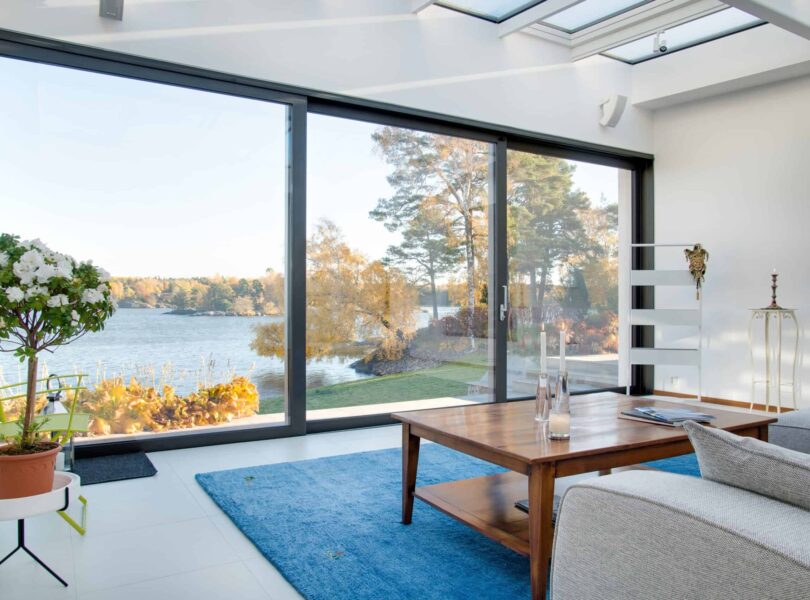
InstallationReplacementWindows
The Role of Waterproofing in High-Rise and Mid-Rise Buildings
In tall buildings, small failures don’t stay small for long.
What might be a minor leak in a single-story structure becomes a cascading problem in mid-rise and high-rise buildings—traveling vertically, spreading laterally, and affecting multiple units, floors, and tenants before it’s ever visible.
That’s why waterproofing in taller buildings isn’t optional maintenance. It’s critical infrastructure—and one of the most important factors in long-term building performance, safety, and asset protection.
The Problem: Height Amplifies Every Weakness
As buildings rise, so do the forces acting on them.
Wind pressure increases with elevation. Water is driven horizontally, not just downward. Thermal movement is more pronounced across long façades. And gravity helps moisture travel far beyond its entry point.
In mid-rise and high-rise buildings, waterproofing failures are rarely isolated. A single compromised joint or window perimeter can affect dozens of spaces below—often without clear warning signs.
Why High-Rise Waterproofing Fails Differently
Many waterproofing systems are designed with low-rise structures in mind. When applied to taller buildings without adjustment, they fail.
Common high-rise and mid-rise waterproofing issues include:
Sealants that can’t accommodate long-term movement
Improper detailing at slab edges and curtain wall transitions
Window systems not integrated with surrounding wall assemblies
Aging expansion joints that no longer flex
Inadequate testing after installation
These failures don’t happen overnight. They develop slowly—often behind finished walls—until damage becomes unavoidable and expensive.
Water Doesn’t Enter Where It Appears
One of the most dangerous misconceptions about water intrusion in tall buildings is assuming the visible leak marks the source.
In reality, water often enters several floors above where damage appears. It migrates along framing, insulation, and structural elements—emerging far from the original failure point.
This is why surface-level repairs rarely solve high-rise leak problems. Without proper diagnosis, teams end up chasing symptoms instead of stopping intrusion at its source.
The High Cost of Ignoring Waterproofing Systems
When waterproofing fails in mid-rise and high-rise buildings, the consequences escalate quickly.
Owners and managers may face:
Repeated interior repairs across multiple units
Mold remediation and air quality concerns
Tenant displacement and complaints
Insurance claims and coverage disputes
Structural deterioration at slab edges and anchors
Loss of confidence from occupants and stakeholders
In occupied buildings—especially hotels, offices, and multifamily properties—these issues directly impact revenue and reputation.
Waterproofing Is a System, Not a Product
Effective waterproofing isn’t about a single sealant or coating. It’s about how multiple systems work together.
In tall buildings, successful waterproofing depends on:
Window and curtain wall integration
Expansion joint performance
Flashing continuity
Sealant compatibility with substrates
Drainage and pressure equalization
Correct installation sequencing
If any part of that system fails—or was never designed to work together—the building becomes vulnerable.
Where Waterproofing Matters Most in Tall Buildings
In our experience, the most critical waterproofing zones in mid-rise and high-rise structures include:
Window and door perimeters
Curtain wall and window wall transitions
Slab edges and balcony interfaces
Expansion joints between structural elements
Façade penetrations and attachments
These areas experience constant movement and pressure—and require specialized detailing and materials designed for vertical environments.
The Role of Testing in High-Rise Waterproofing
Assumptions are expensive in tall buildings.
Professional water testing allows teams to recreate real-world conditions—wind-driven rain, pressure differentials, and thermal movement—under controlled observation. This process identifies exact failure points without unnecessary demolition.
Testing is especially valuable in occupied buildings, where minimizing disruption is critical. Targeted repairs informed by testing are faster, cleaner, and far more effective than broad, exploratory work.
Why Installation Experience Matters More Than Materials
Many waterproofing failures stem from installation errors—not product defects.
Sealants applied outside temperature ranges, improper joint preparation, skipped primers, or rushed detailing all shorten system lifespan. In tall buildings, these mistakes are magnified.
AFR Windows approaches waterproofing with the same rigor as structural work. Our teams understand movement, sequencing, and long-term performance—not just product specifications.
Proactive Waterproofing Protects Asset Value
For owners and asset managers, proactive waterproofing is a form of risk control.
Regular assessments, maintenance planning, and targeted upgrades reduce emergency repairs, stabilize operating budgets, and extend façade lifespan. More importantly, they protect tenant relationships and building reputation.
In high-value properties, preventing one major leak event can justify years of proactive investment.
The Bottom Line: Height Demands Precision
Mid-rise and high-rise buildings don’t forgive shortcuts.
Waterproofing failures become more complex, more expensive, and more disruptive as buildings get taller. Addressing issues early—with the right expertise—prevents cascading damage and protects long-term performance.
Ready to Assess Your Building’s Waterproofing?
If your building has recurring leaks, unexplained moisture, or aging façade systems, now is the time to evaluate—not react.
AFR Windows provides professional waterproofing assessments, leak testing, and system-level solutions designed specifically for mid-rise and high-rise buildings.
📞 Schedule a waterproofing consultation
📐 Request a high-rise envelope evaluation
🏢 Protect your building before small failures become major ones